Types of Retainers in the UK: Clear, Hawley, Fixed and Vivera Compared
What each one looks like, what it costs, how long it lasts and which works best
You have finished braces, or your child has, and been told "you'll need a retainer". Then the questions start. Clear or wire? Glued in or removable? And why does one cost several times as much as another?
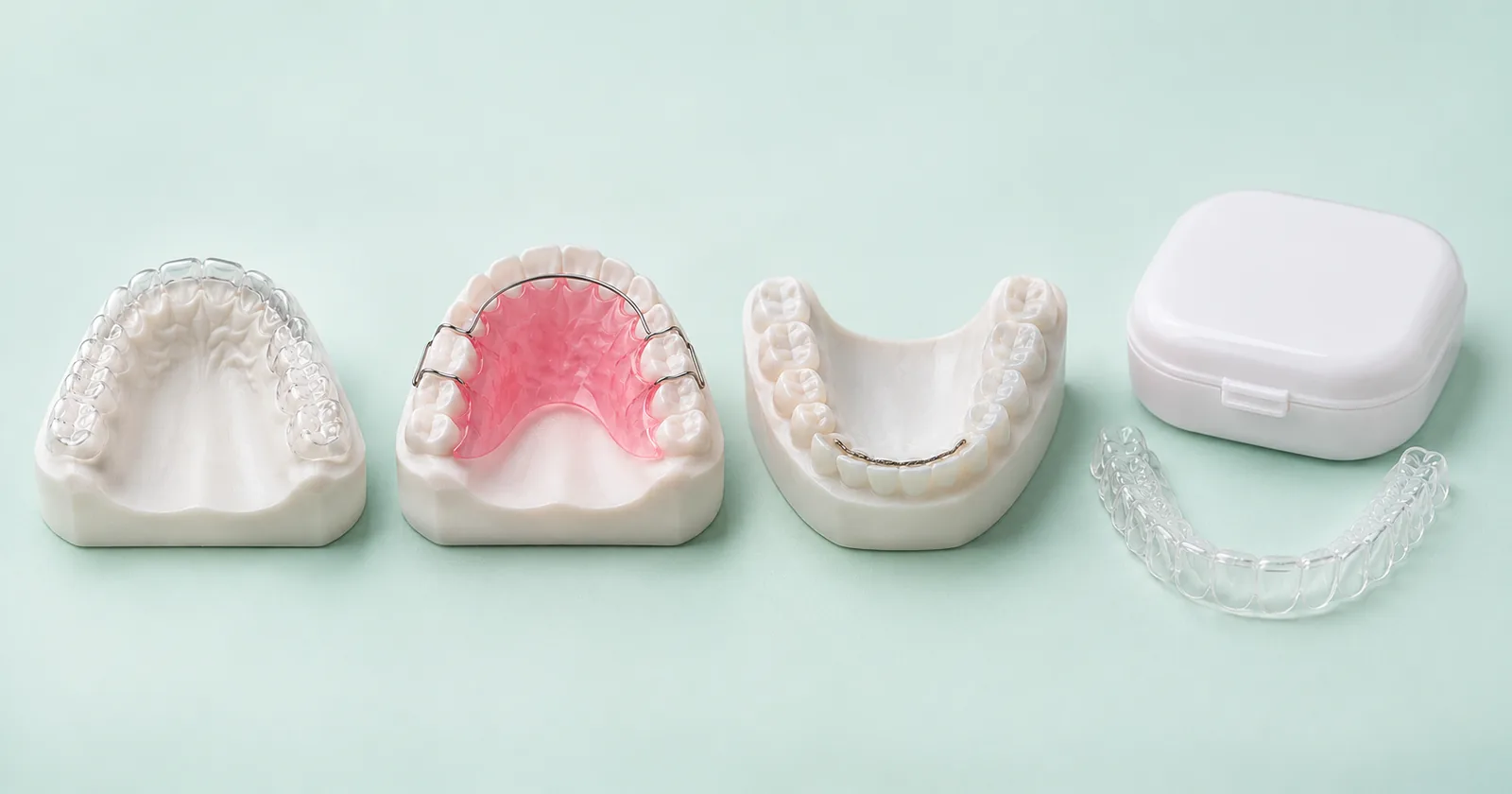
There are four main types of retainer in the UK. They all do the same job, holding your teeth where treatment left them, but they look, feel, cost and fail differently. This guide explains each one, compares them side by side, and sets out what the clinical research says about which works best.
Key takeaways
- The four main UK types are clear (Essix), Hawley (wire and acrylic), fixed (a wire bonded behind the teeth) and Vivera (Invisalign's own clear retainer).
- A 2009 survey of 240 UK orthodontists found clear retainers the most used type in NHS, hospital and private practice.
- No type is proven best at holding teeth. A 2023 Cochrane review of 47 studies could not draw firm conclusions.
- In a UK trial of 397 patients, clear retainers were more cost-effective, broke less and were preferred over Hawley retainers in the first six months.
- The retainer that works is the one you actually wear, every night, for as long as your orthodontist advises.
The 4 types of retainer at a glance
Clear retainers are discreet, and they are the only type we recommend replacing from a home impression. Hawley retainers are tough and adjustable but visible. Fixed retainers need no effort from you but can come loose. Vivera is a branded clear option sold only through Invisalign providers.
| Feature | Clear (Essix) | Hawley | Fixed (bonded) | Vivera |
|---|---|---|---|---|
| What it is | Thin clear plastic shell | Acrylic plate plus a front wire | Thin wire glued behind the teeth | Invisalign's clear plastic retainer |
| Removable? | Yes | Yes | No | Yes |
| Visible? | Barely | Yes, the front wire shows | No, it sits behind the teeth | Barely |
| Private UK price, new patient | About £150 to £300 per arch | About £210 to £300 per arch | About £225 to £455 per arch | £420 to £622, usually for a pack of sets from your Invisalign provider |
| Typical lifespan | 6 months to 3 years | 5 to 10 years | 3 to 10 years | 1 to 5 years |
| Replace without a dentist visit? | Yes, if your teeth haven't moved (home impression kit) | Not recommended: the wire should be fitted and adjusted in person | No, it is bonded on in the chair | No, ordered through a provider |
| Best for | Most people, night-time wear | People who want durability | Teeth at high risk of moving | Patients finishing Invisalign |
"Per arch" means the upper or the lower teeth, so a full set is two arches. The prices are what a new private patient would pay at ten UK orthodontic practices: the retainer plus the consultation you need first, both taken from the fees each practice publishes on its own website, checked on 22 November 2026 (see the full list). X-rays or records, if you need them, cost extra. Your own practice's fees may differ.
Lifespans are commercial estimates from Dentaly's retainer guide and Vivera guide, not clinical data. They are not a head-to-head comparison, and all of them vary with how well a retainer is looked after.
Clear retainers (Essix, vacuum-formed)
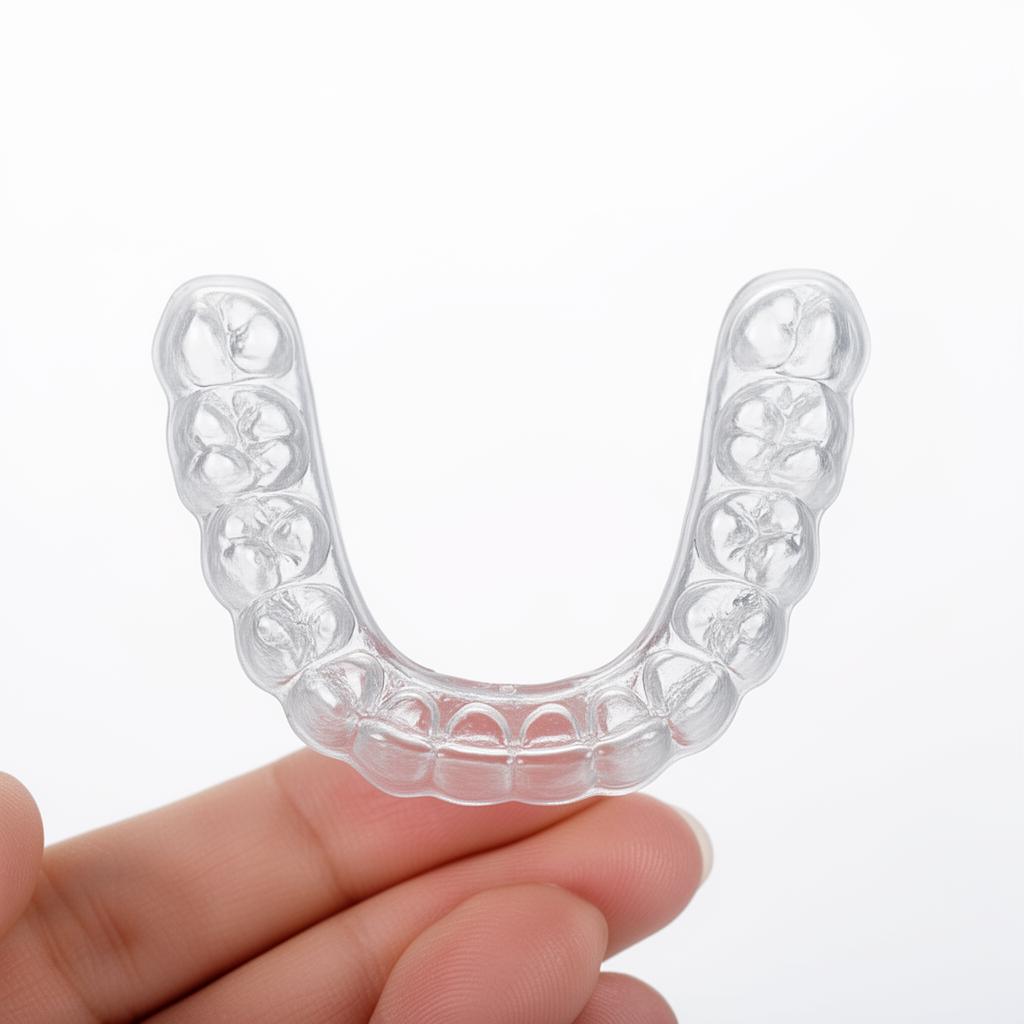
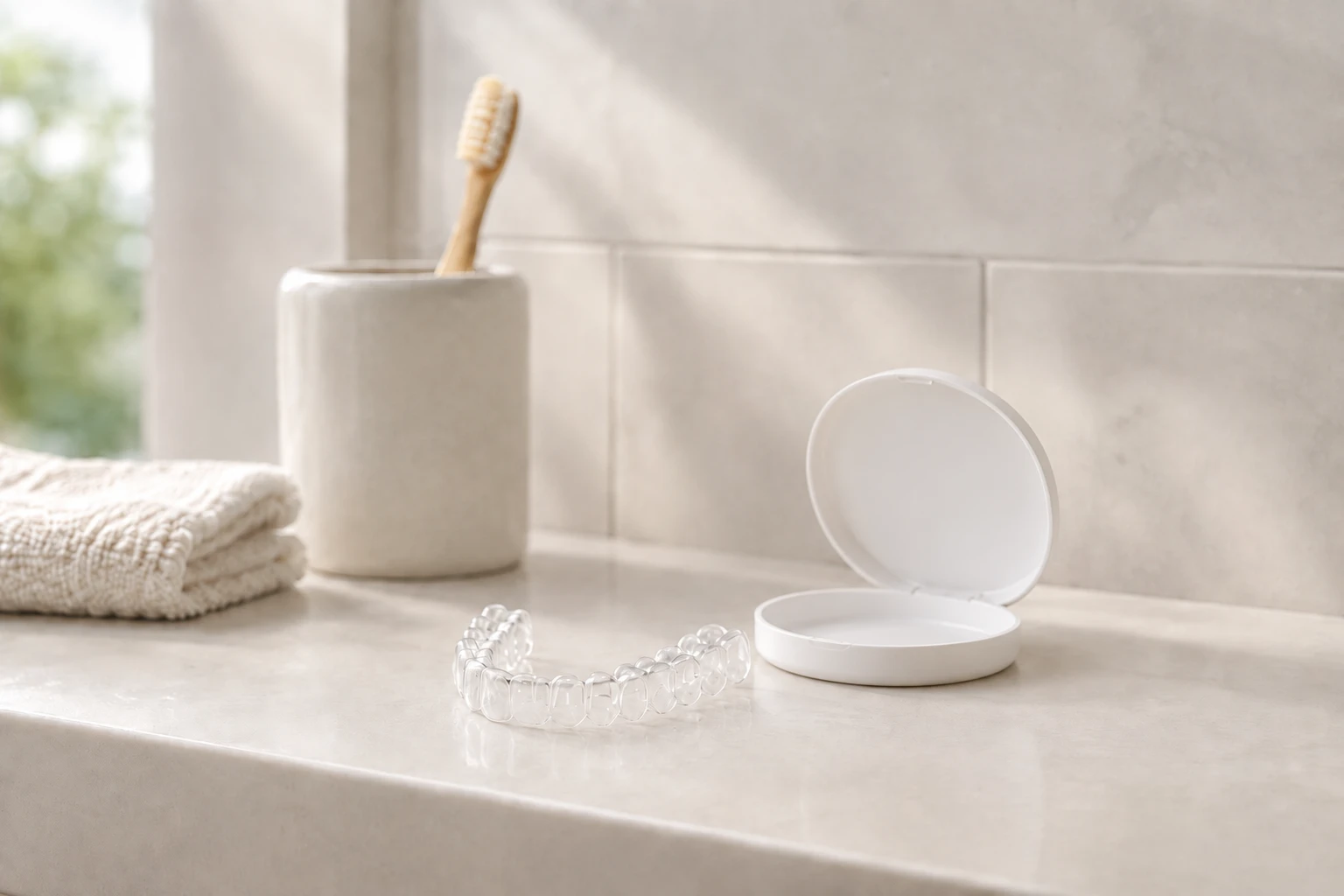
A clear retainer is a thin, transparent plastic shell moulded to the exact shape of your teeth. UK orthodontists often call it a "vacuum-formed retainer". "Essix" is a brand of retainer plastic, and the name is often used for any clear retainer.
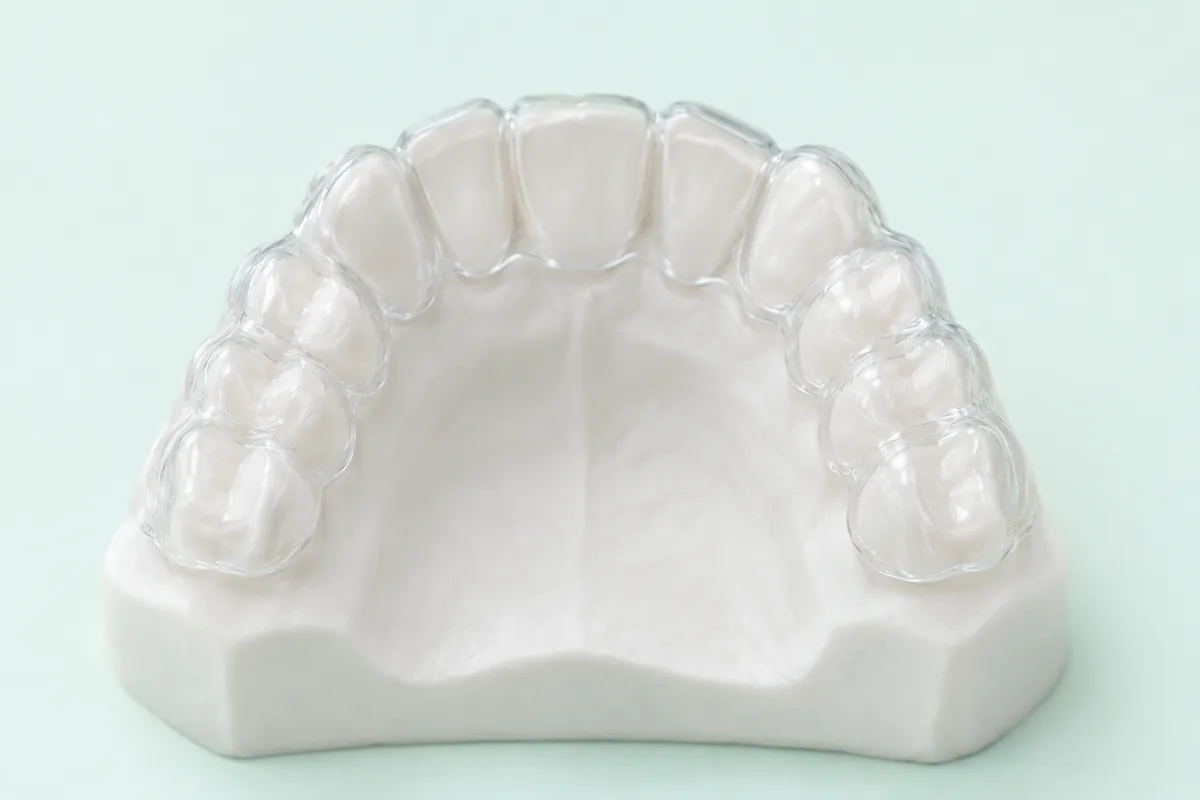
You usually wear it at night. It is hard to spot when you do wear it, and it does not change how you speak once you are used to it.
- Pros: discreet and comfortable, and the only type we recommend replacing from a home impression, without a dentist visit. In a UK trial it was more cost-effective than a Hawley retainer (Hichens et al., 2007).
- Cons: the plastic wears and can crack, so expect to replace it more often than a Hawley. It cannot be adjusted.
For how they are made and what separates a good one from a cheap one, see how Essix retainers are made.
Hawley retainers (the "metal retainer")
A Hawley retainer has a hard acrylic plate that sits against the roof of your mouth (or behind your lower teeth), with a thin metal wire running across the front of your teeth and small clasps hooking around the back teeth. It is what most people mean by a "metal retainer".
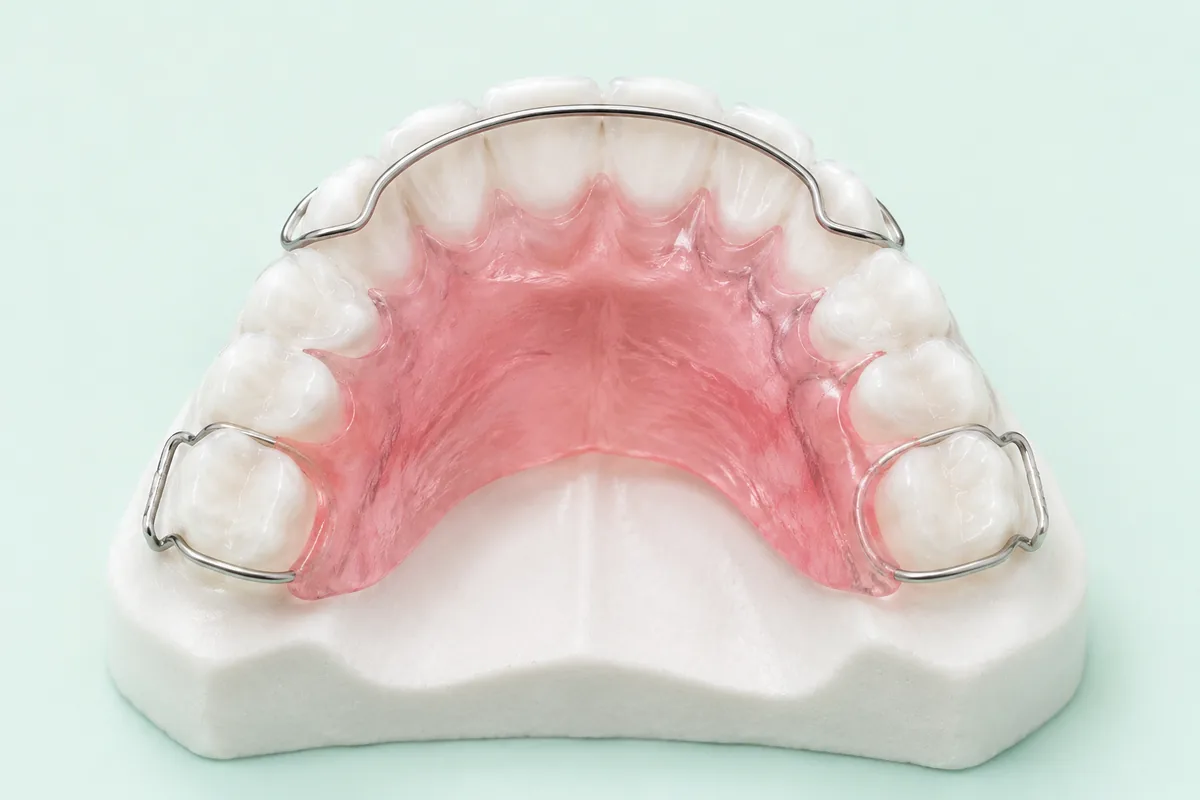
- Pros: very durable, and a dentist can adjust the wire to make small corrections. The acrylic can often be repaired.
- Cons: the front wire is visible, it can make you lisp for the first few days, and it is bulkier to carry than a clear retainer.
A spring retainer is a variation that uses springs to push teeth by a small amount. That makes it a treatment, not just a retainer, so a dentist has to manage it. The same goes for anything described as an "active" retainer.
Retainers at Home does not make Hawley retainers. We recommend having the wire shaped and adjusted in person at a fitting, which cannot be done by post. For more on what a Hawley involves, see our Hawley retainer guide.
Fixed retainers (bonded, permanent or lingual)
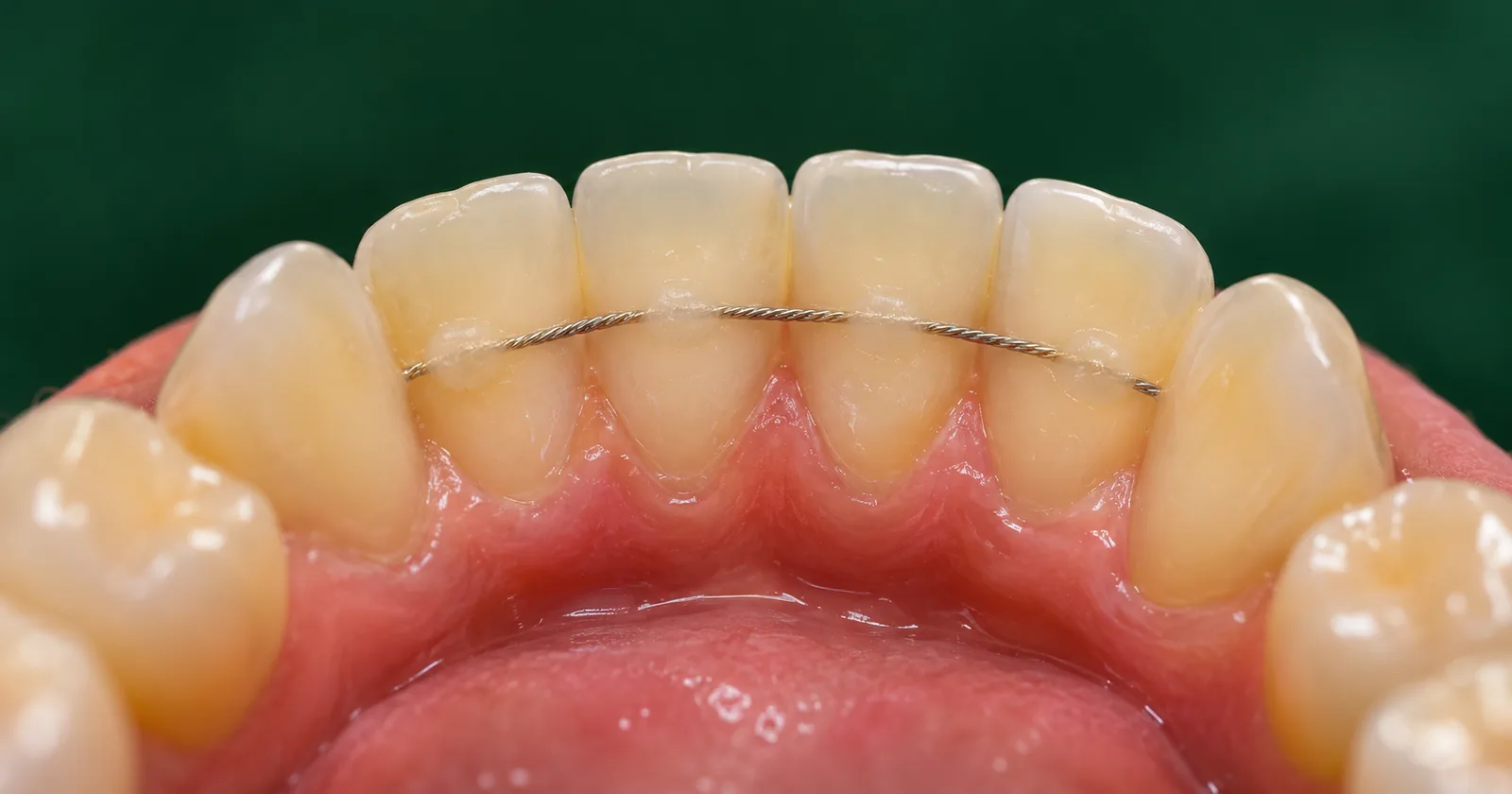
A fixed retainer is a thin wire glued to the back of your front teeth, usually the lower six. You also hear it called a permanent, bonded or lingual retainer. It stays in all the time, so there is nothing to remember, and nobody can see it.
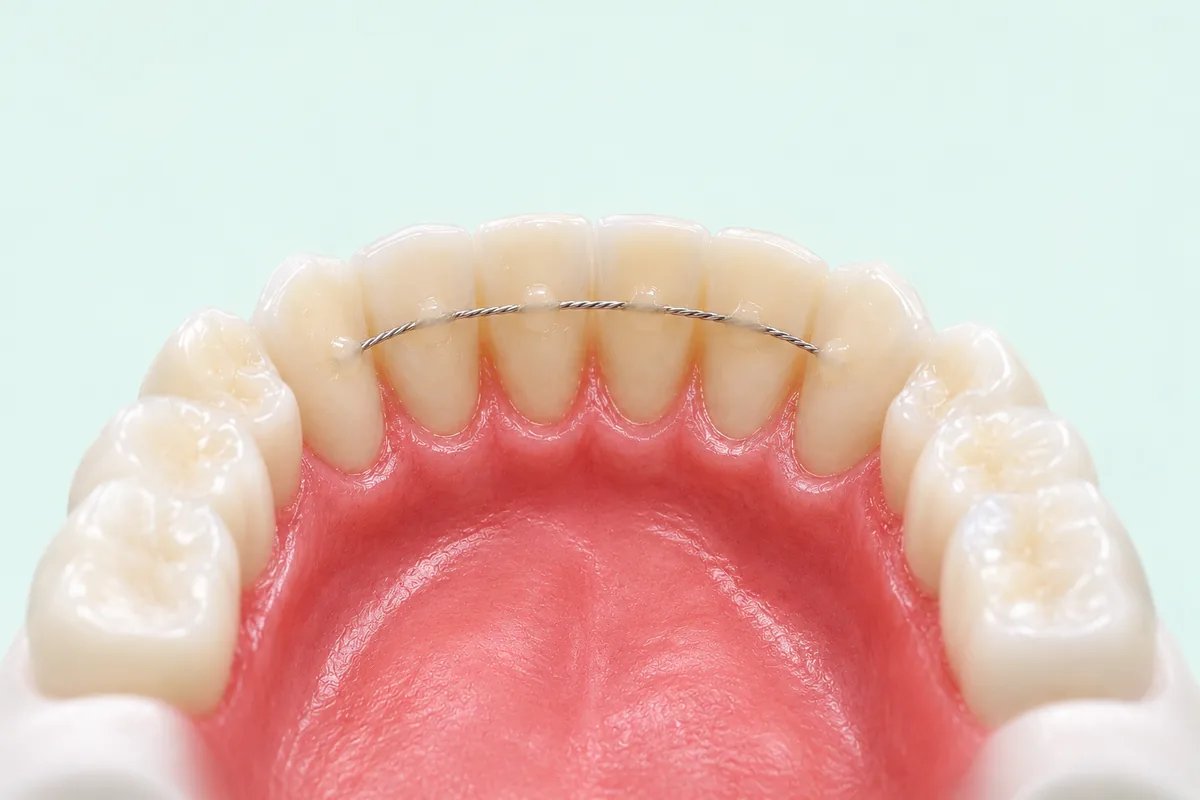
The trade-off is maintenance. Food and plaque collect around the wire, so you need floss threaders or interdental brushes, and the bond can fail. A 2023 review of 34 studies found that about 35% of bonded retainers had failed, rising to 54% in the longest follow-ups (Aye et al., 2023). A loose wire can let a tooth drift, often without you noticing.
That is why many orthodontists give a removable retainer as well. For fitting, repair and NHS costs, see what a permanent retainer costs.
Vivera retainers
Vivera is the clear retainer made by Align Technology, the company behind Invisalign. It looks much like any clear retainer but is made from Align's own plastic and is usually sold as a pack of sets, so you have spares.
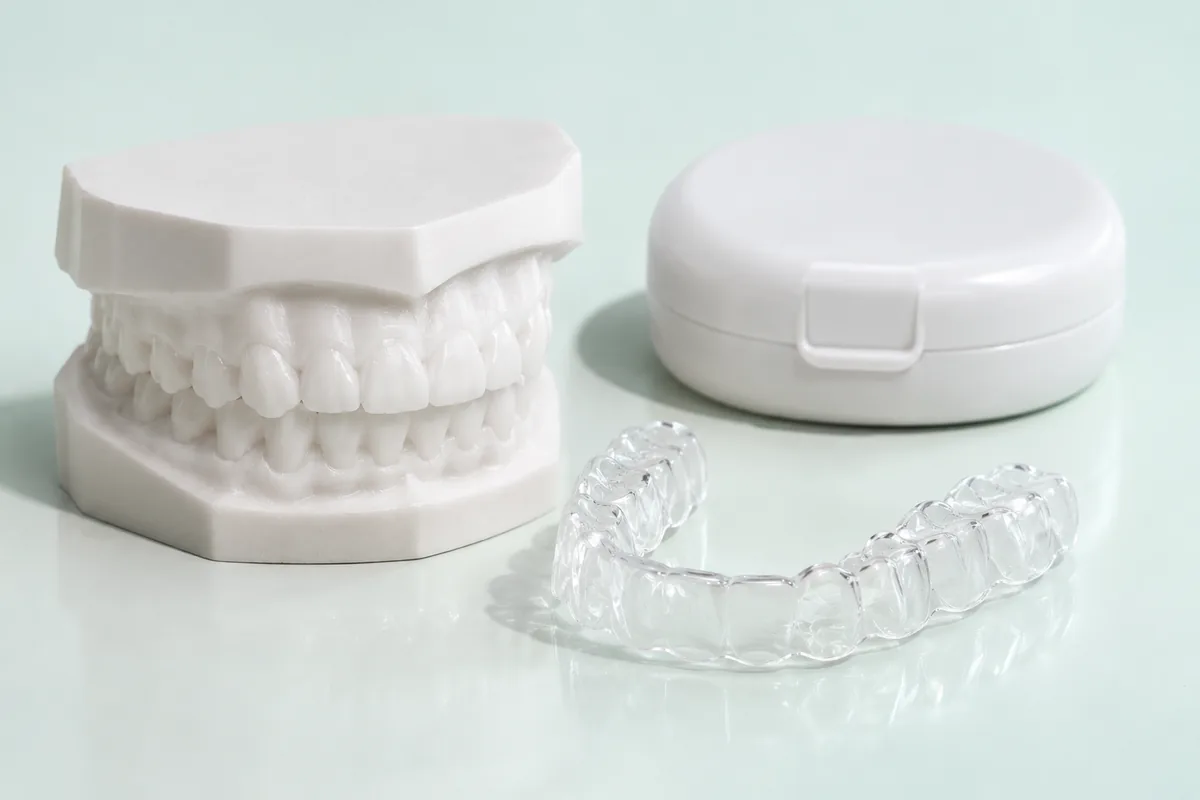
You can only get Vivera through an Invisalign provider. At the four practices we checked that publish a Vivera price, it costs £420 to £622: for example £500 for three sets at a practice in Oxford, and £622 for both arches at a practice in Southsea (full list). Prices and pack sizes vary, so ask for a quote. If you have just finished Invisalign, Vivera may be included in your treatment package. For the cost in detail and the alternatives, see Vivera retainers: cost and alternatives.
Which type of retainer is best? What the research says
No type has been proven best at keeping teeth straight. The most thorough summary of the evidence, a 2023 Cochrane review of 47 studies involving 4,377 people, concluded that it could not "draw firm conclusions about any one approach to retention over another" because the evidence was low or very low certainty (Cochrane, 2023).
Several of the best-known trials comparing clear and Hawley retainers were run in UK clinics:
- Cost and comfort: a trial of 397 patients at a specialist orthodontic practice in England found clear retainers were more cost-effective than Hawley retainers from the point of view of the NHS, the practice and the patient. Most patients preferred them, and fewer broke over six months (Hichens et al., 2007).
- Holding the teeth, 6 months: in the same group of patients, front teeth moved slightly more with Hawley retainers. The median difference was 0.56 mm in the lower arch and 0.25 mm in the upper (Rowland et al., 2007).
- Holding the teeth, 12 months: a smaller UK trial of 82 patients found no significant difference between the two at any point over a year. Its authors concluded that the choice of retainer is unlikely to affect relapse, so other factors such as cost may matter more (Barlin et al., 2011).
The Cochrane review adds one balancing point: clear retainers may give better patient satisfaction but may not last as long as Hawley retainers.
The practical conclusion is that the type matters less than the habit. A retainer only works while it is in your mouth, so the best one is the one you will actually wear every night. Our guide to how long to wear a retainer covers how often and for how long.
Which retainer will my orthodontist give me?
Most UK patients are likely to get clear retainers, sometimes with a fixed wire behind the lower front teeth as well. A 2009 survey of 240 UK orthodontists found clear (vacuum-formed) retainers were the most used type in NHS, hospital and private practice. Bonded wires were used more in private practice, often alongside a clear retainer and especially on the lower teeth. Hawley retainers were still common in community clinics (Singh et al., 2009).
Some non-UK websites describe Hawley as the standard retainer. In that UK survey, clear was the norm.
If your braces were on the NHS, your first retainers are part of that treatment. In England, replacing a lost or broken NHS appliance costs £99.60 (2026 charge), and you pay it even if you would normally get free NHS dental treatment (NHSBSA). Charges differ in Scotland, Wales and Northern Ireland, so check with your practice. Once NHS care has ended, replacements are usually private.
Can you switch to a different type of retainer?
Often, yes, as long as your teeth have not moved. Common switches include:
- From a broken Hawley to a clear retainer: a clear retainer made from an up-to-date impression of your teeth holds them in their current position. If they still look and feel the same as when your treatment finished, a clear replacement is a common choice.
- A clear retainer as a backup to a fixed wire: many people wear a clear retainer at night over their bonded wire, so that if the wire comes loose the teeth are still held. The impression has to be taken with the wire in place. Only a dentist can remove or re-bond the wire itself.
- From Vivera to a standard clear retainer: the job is the same, so a custom clear retainer made from a fresh impression works as a replacement if you would rather not go back through an Invisalign provider.
See a dentist or orthodontist first, rather than ordering online, if:
- your teeth have already moved and the old retainer no longer fits
- you have a spring or active retainer that is still moving teeth
- you have pain, a loose tooth or problems with your gums
If none of those apply, you can take an impression at home with our step-by-step impression guide and get a custom clear replacement retainer, made in a UK dental lab, from £89 per arch.
Frequently asked questions
What are the 4 types of retainers?
The four main types in the UK are clear retainers (often called Essix), Hawley retainers (an acrylic plate with a metal front wire), fixed retainers (a wire bonded behind the front teeth) and Vivera retainers (Invisalign's own clear retainer).
Which type of retainer is the most comfortable?
Most people find clear retainers more comfortable, and in a UK trial most patients preferred them to Hawley retainers (Hichens et al., 2007). Fixed retainers are not felt once you are used to them, but they take more effort to clean around.
What is a metal retainer?
"Metal retainer" usually means a Hawley retainer: an acrylic plate with a metal wire across the front of the teeth. People sometimes also use it for a fixed retainer, which is a thin metal wire glued behind the teeth.
Can you get a retainer without going to the dentist?
You can get a clear retainer without a dentist visit if your teeth have not moved since treatment. You take an impression at home and a dental lab makes the retainer from it. Hawley, fixed and Vivera retainers should be fitted at a dental appointment.
Do all retainers need to be worn every night?
Removable retainers are usually worn every night once the first months after treatment have passed, but follow your orthodontist's instructions. Fixed retainers are in place all the time. Teeth can move at any age, so retainers are usually worn long term.
The bottom line
- Clear retainers are discreet, comfortable and the only type we recommend replacing from home, but they wear out sooner.
- Hawley retainers last longer and can be adjusted, but they are visible and should be fitted in person. Fixed retainers need no effort but can fail without you noticing, so they are often paired with a removable retainer. Vivera is a branded clear retainer, sold only through Invisalign providers.
- Research has not found a single best type. The habit of wearing your retainer matters more than the type you choose.
If you need a replacement and your teeth have not moved, a custom clear retainer from £89 can be made from an impression you take at home. If anything has changed, see your dentist first.
About this guide: Retainers at Home is a dentist owned UK company, founded in 2021, that makes custom clear retainers from home impressions. We do not make Hawley, fixed or Vivera retainers, so for those we recommend your own dentist or orthodontist. Research findings were checked against the original study abstracts, and prices and NHS charges against the sources below, on 22 November 2026. Questions or corrections: contact us. More about who we are: about Retainers at Home.
Need a replacement and your teeth haven't moved?
Custom clear retainers made in a UK dental lab from impressions you take at home. £89 for one arch, £139 for both.
See clear retainersReferences
- Martin C, Littlewood SJ, Millett DT, et al. Retention procedures for stabilising tooth position after treatment with orthodontic braces. Cochrane Database of Systematic Reviews, 2023 (plain language summary)
- Hichens L, Rowland H, Williams A, et al. Cost-effectiveness and patient satisfaction: Hawley and vacuum-formed retainers. European Journal of Orthodontics, 2007
- Rowland H, Hichens L, Williams A, et al. The effectiveness of Hawley and vacuum-formed retainers: a single-center randomized controlled trial. American Journal of Orthodontics and Dentofacial Orthopedics, 2007
- Barlin S, Smith R, Reed R, Sandy J, Ireland AJ. A retrospective randomized double-blind comparison study of the effectiveness of Hawley vs vacuum-formed retainers. Angle Orthodontist, 2011
- Singh P, Grammati S, Kirschen R. Orthodontic retention patterns in the United Kingdom. Journal of Orthodontics, 2009
- Aye ST, Liu S, Byrne E, El-Angbawi A. The prevalence of the failure of fixed orthodontic bonded retainers: a systematic review and meta-analysis. European Journal of Orthodontics, 2023
- NHS Business Services Authority, Replacement dental appliances
- Dentaly, Teeth retainers (lifespan estimates)
- Dentaly, Invisalign Vivera retainers (lifespan estimates)
UK practice fees we checked
What a new private patient would pay for one arch at each practice: the retainer plus the practice's consultation fee, both from its own published fee list, read on 22 November 2026. X-rays and records are extra. Dates are the page's own "last updated" date where it shows one.
- Central Orthodontics, Stirling and Falkirk: clear £151 to £155; bonded from £249; Vivera £420 to £480 (updated January 2026)
- Southsea & Waterlooville Orthodontics: clear £178; bonded £263 (existing patients only); Vivera £459 one arch, £622 both (updated February 2026)
- Exeter Orthodontics: clear £200; fixed £295 (updated April 2026)
- Contour Orthodontists, Hampshire: clear £296; bonded £453 (updated May 2026)
- Oxford Orthodontics Practice: clear £255; Hawley £255; bonded £375; Vivera £500 for three sets
- Phoenix Orthodontic Practice, Beckton, London: clear from £215; Hawley from £250; fixed from £350 (prices from September 2026)
- Orthodontic Gallery, Ilford: clear £190; Hawley £230; fixed £290; Vivera £595
- Manchester Orthodontics: clear £175; Hawley £245; bonded £225
- OrthoDental, Hanwell, London: Hawley £300; fixed £310
- Hammersmith Orthodontics, London: Hawley £210; fixed £395