How Long Do You Have to Wear a Retainer? A UK Dentist on Why It's for Life
Your wear schedule, what the evidence says, and what happens if you stop
Quick Answer
In the UK, orthodontists usually advise wearing your retainer every night for the first year after braces, then reducing to at least one or two nights a week for the rest of your life. You do not need it in 24 hours a day, but some level of retention really is lifelong, because teeth keep drifting as you age. The good news: "for life" quickly becomes a small nightly habit, not a burden.
If you have just had your braces removed, one worry comes up more than any other: will you really be stuck wearing a retainer forever? Below, I explain exactly what the wear schedule looks like, what the research actually shows, and what to do if you slip and your retainer starts to feel tight.
The short answer: retainer wear, phase by phase
Most UK patients follow a schedule close to this. Your own orthodontist may adjust it for your case, so always follow their specific advice.
| Phase | Timing | Typical wear |
|---|---|---|
| Settling in | First few months after braces | Full time or nightly, as your orthodontist instructs |
| Year one | First 12 months | Every night |
| Long term | After the first year, for life | Reduce gradually to at least once or twice a week |
This mirrors the guidance in the British Orthodontic Society's patient information leaflet, which states that you should "wear your retainers every night for the first 12 months and then reduce the wear gradually to at least once a week long term."
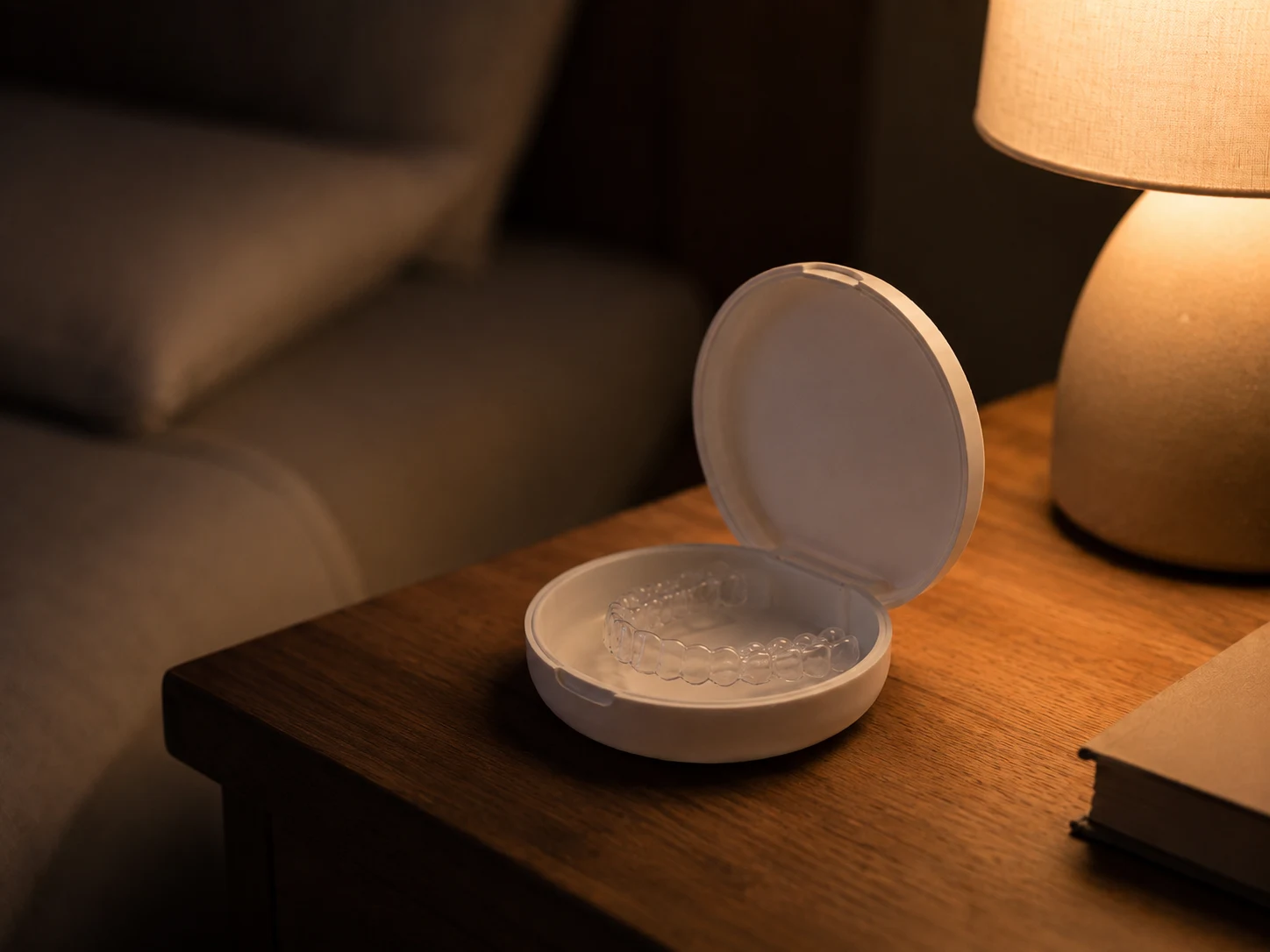
Do you really have to wear a retainer forever?
Yes, in some form, but far less than most people fear. The honest answer from UK orthodontics is clear. As the British Orthodontic Society puts it, "the only way to have permanently straight teeth is to wear a retainer on a part-time basis for life."
Notice the words "part-time". Lifelong retention does not mean wearing a retainer constantly. For most people it means popping a clear retainer in for a night or two each week while they sleep. That is the trade for keeping the results you spent months or years of braces to achieve.
If you would like the background on why teeth never truly settle and stop moving, we cover that in more depth in our guide to retainers after braces.
Why do teeth keep moving, even years after braces?
Teeth are not set in concrete. They sit in bone and are held by fibres and ligaments that respond to pressure from your lips, tongue, cheeks and bite every single day. Once the braces come off, your teeth have a natural tendency to drift back towards where they started, a process orthodontists call relapse.
The way I explain it to patients is this. Think of a tooth like a tree. There is the part you can see above the surface, and there is a root system underneath that you cannot see, holding it in place. If a tree starts to lean, you can put a support against it and straighten it up, and for as long as that support is there the tree stays where you want it. Take the support away, though, and the tree slowly drifts back towards the lean it had before. Teeth behave in exactly the same way. Your retainer is the support. Remove it and, given enough time, the tooth goes back.
There is also a second, slower force at work: ageing. The British Orthodontic Society notes that "changes in the position of your teeth can continue throughout life and are part of the normal ageing process." In other words, even people who never had braces often see their teeth crowd a little as they get older.
Does your age make a difference?
Standard orthodontic teaching, including Proffit's Contemporary Orthodontics, describes a pattern known as late lower incisor crowding, sometimes called orthodontic ageing, where the lower front teeth tend to crowd during the late teens and twenties and continue to shift gradually through adult life. This is one of the main reasons the profession moved towards recommending long term retention rather than stopping after a couple of years. Our article on whether retainers can move teeth back explains what a retainer can and cannot fix once movement has happened.
What does the evidence actually say?
This is where I want to be straight with you, because a lot of online advice is more confident than the science justifies.
The most authoritative summary of the research is the Cochrane review of retention procedures (Martin and colleagues, updated 2023). Its honest conclusion is that "the evidence is low to very low certainty, so we cannot draw firm conclusions about any one approach to retention over another." So no one can claim a single perfect protocol is proven best.
What is not in doubt is the underlying problem. The review's own starting point is that "without a phase of retention after successful orthodontic treatment, teeth tend to relapse, that is, to return to their initial position." The uncertainty is about which retainer and which schedule works best, not about whether retention is needed at all.
It is also worth knowing why the certainty is low. The review looked mainly at results at 12 months, and its authors specifically call for future studies that measure tooth stability over at least two years. In other words, the long term has simply not been studied enough yet, rather than being disproven. That is why UK guidance errs on the side of carrying on. The British Orthodontic Society puts it more bluntly: "If you stop wearing your retainers there is a high chance your teeth will move."
There is also reassuring evidence on how much you need to wear them. A systematic review of clear retainer wear protocols (Odontology, 2017) compared part time and full time wear of clear (vacuum formed) retainers and found no statistically significant difference in keeping teeth aligned, and concluded that full time wear "is not superior to part-time". The Cochrane review found the same pattern for Hawley retainers: "no evidence of a difference in stability between part-time and full-time use". Put simply, wearing a clear retainer at night appears to hold your teeth just as well as wearing it all day. That is why the modern advice is nightly, not round the clock.
When can you cut down to fewer nights?
After the first year of nightly wear, most UK orthodontists allow you to taper down. The British Orthodontic Society describes reducing "gradually to at least once a week long term." Many people settle on two or three nights a week and stay stable.
The simplest rule to follow is to let the retainer tell you. If it slips in easily and feels comfortable, your current frequency is working. If it starts to feel tight, your teeth have begun to drift and you should go back to wearing it more often for a while. When in doubt, ask your dentist or orthodontist.
What happens if you stop wearing your retainer?
Your teeth start to move back. How much depends on how long you leave it.
Usually little or no visible change. Resuming your normal schedule is enough.
Minor shifting is possible, most noticeable on the front teeth. Your retainer may start to feel snug.
Teeth can move enough that the old retainer no longer fits, and you may need a new one made.
Movement can be significant, and correcting it may mean going back into braces or aligners.
This is not a scare tactic, it is simply how teeth behave without something holding them. As the British Orthodontic Society warns, if you stop wearing your retainers "there is a high chance your teeth will move", and it adds that if that happens it "may be difficult to correct and is unlikely to be treated under the NHS."
My retainer feels tight. Is it too late?
Not necessarily. A retainer that feels tight after a short break usually means your teeth have shifted a little and the retainer is gently guiding them back. If it still fits and is not painful, wearing it consistently for a few days often settles things down.
If your retainer no longer fits, feels sharp, or is causing real discomfort, do not force it. That is the point to get a fresh one made from a new impression of your teeth as they are now. You can arrange a replacement retainer without a dentist visit using an at home impression kit, and our guide to replacing a retainer walks through when that is and is not appropriate.
Clear versus bonded retainers: does the wear time differ?
Yes. There are two broad types.
A removable clear retainer (often called an Essix or vacuum formed retainer) is the type you take in and out, following the nightly then weekly schedule above. You are in control of the wear. Our article on how clear retainers work explains the material and fit.
A bonded (fixed) retainer is a thin wire glued behind the front teeth. It works around the clock without you thinking about it, but it needs careful cleaning and regular dental checks to make sure it stays intact. Many people use a fixed retainer behind the front teeth and a removable clear retainer over the top for full coverage.
How often should you replace your retainer?
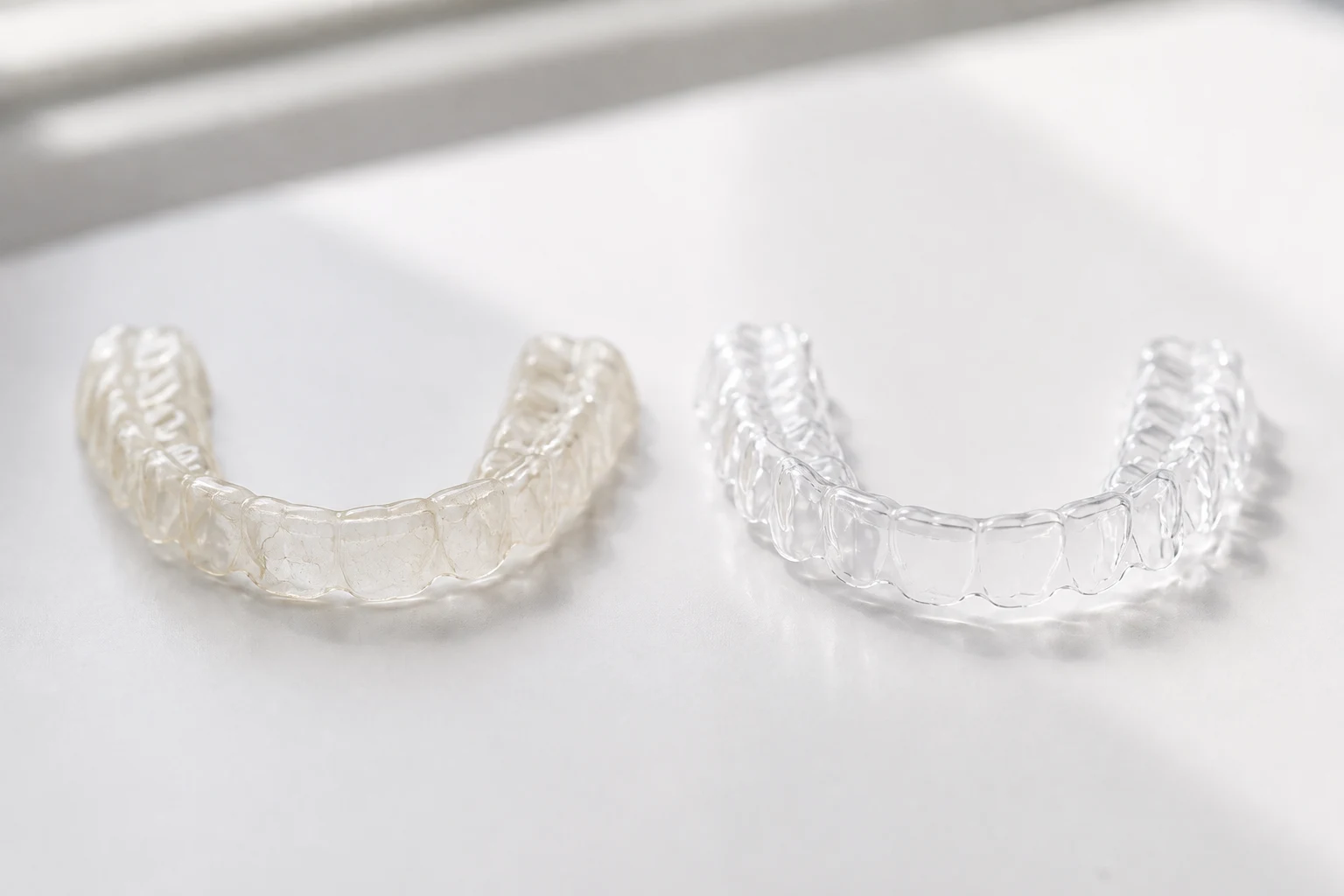
Clear retainers are hard working bits of plastic and they do wear out with nightly use, so plan to replace them periodically rather than waiting for them to fail. Signs it is time include cracks, cloudiness, a poor fit, or a smell that will not clean away. Keeping a spare means you are never caught without retention if one breaks. Our guide to keeping a retainer clean helps you get the longest life out of each set.
Frequently asked questions
How many hours a day should you wear a retainer?
For most people past the first few months, a normal night's sleep is enough, so roughly 7 to 8 hours. Your orthodontist may ask for full time wear straight after your braces come off, but as covered above, the research does not show full time wear holding teeth better than night time wear.
Is it OK to miss one night of retainer wear?
Yes. Missing a single night rarely causes visible movement. Put it back in the next night and carry on as normal. The problem is never the odd missed night, it is drifting into weeks or months of not wearing it. If it feels tight when you go back to it, wear it every night for a few days until it settles.
Can I skip the first year of nightly wear and go straight to a few nights a week?
No, and this is worth being firm about. The first 12 months is when teeth are least stable, because the bone and the fibres around each tooth are still adapting to their new positions. British Orthodontic Society guidance is every night for the first 12 months, then reduce gradually. Tapering too early is one of the most common reasons people end up with relapse.
Do you have to wear a retainer forever after Invisalign or clear aligners?
Yes. Retention advice is the same whether your teeth were straightened with fixed braces or clear aligners, because the reason teeth relapse does not change. Once active treatment stops, teeth drift back towards where they started and keep changing position with age, so long term retention applies to aligner patients just as much.
Can I wear my retainer during the day instead of at night?
You can. What matters is consistent wear rather than the specific hours. Most people find night time far easier to stick to, and it avoids a clear retainer affecting your speech at work or coming out for every meal and drink. If you do wear it during the day, take it out for anything other than water, and never wrap it in a napkin, which is the most common way retainers end up in a bin.
What happens if my retainer feels tight after not wearing it?
Usually it means your teeth have shifted slightly and the retainer is gently guiding them back. If it still seats fully and is not painful, wear it every night for a few days and it should settle. If it will not seat, feels sharp, or causes real discomfort, do not force it, because an ill fitting retainer puts uneven pressure on individual teeth. Get a new one made from a fresh impression of your teeth as they are now.
Key takeaways
- ✓ In the UK, the usual advice is every night for the first year, then at least once or twice a week for life.
- ✓ Some retention is genuinely lifelong, because teeth keep drifting as part of normal ageing.
- ✓ Nightly wear appears to hold teeth as well as full time wear, so you do not need it in all day.
- ✓ The strongest research (Cochrane) is honest that no single retainer or protocol is proven best, but UK guidance is clear that stopping wear risks relapse.
- ✓ If your retainer feels tight, wear it more often for a few days. If it no longer fits, get a new one made.
Retainer worn out or no longer fitting?
Order UK made clear replacement retainers from home, taken from your own impressions. No dentist visit needed.
See how it worksReferences
- British Orthodontic Society — Retainers Patient Information Leaflet, reprinted 2019 (PDF)
- Martin C, Littlewood SJ, Millett DT, Doubleday B, Bearn D, Worthington HV, Limones A. Retention procedures for stabilising tooth position after treatment with orthodontic braces. Cochrane Database of Systematic Reviews, 22 May 2023, CD002283 (PMID 37219527)
- Performance of clear vacuum-formed thermoplastic retainers depending on retention protocol: a systematic review. Odontology, 2017 (PMID 27270920)
- Proffit WR, Fields HW, Sarver DM. Contemporary Orthodontics — retention and relapse (textbook reference)