How to Clean a Retainer: Daily Routine, Deep Cleaning and What to Avoid
Dentist reviewed cleaning guide for clear retainers, from daily rinses to removing white buildup
Quick Answer
Rinse your retainer with cool water every time you take it out, brush it gently once a day with a soft toothbrush and a drop of mild washing-up liquid, and let it dry before it goes back in its case. Once a week, deep clean it with cleaning tablets, an ultrasonic cleaner, or a 50:50 white vinegar soak. Never use hot water, toothpaste or bleach.
A clear retainer sits in your mouth for eight hours or more every night, collecting the same plaque and bacteria as your teeth. Unlike teeth, it can't be repaired once it's scratched, warped or permanently discoloured. That makes cleaning it properly (and avoiding the wrong products) one of the simplest ways to protect both your oral health and the lifespan of your retainer. This guide covers the exact routine we recommend to our customers, reviewed by a GDC-registered dentist.
If you are also unsure how often you should be wearing it, our guide to how long to wear a retainer covers the nightly-then-weekly schedule UK orthodontists advise, and why some retention is lifelong.
How to Clean a Retainer Every Day (The 60-Second Routine)
Daily cleaning takes about a minute and prevents almost every common retainer problem: smells, cloudiness, white buildup and bacterial growth. Rinse with cool water every time the retainer comes out, brush it gently once a day with a soft toothbrush and mild soap, rinse the soap off, and let it dry fully before storing it in its case.
Rinse with cool water, every time
Every time you take your retainer out, rinse it under cool or lukewarm running water. This washes saliva away before it dries into a film that bacteria feed on. Never use hot water: clear retainers are thermoformed plastic, and heat is the single fastest way to warp one beyond use.
Brush gently with mild soap, once a day
Use a soft-bristled toothbrush (keep one just for your retainer) and a single drop of mild, unscented washing-up liquid. Brush the inside and outside surfaces gently. Skip the toothpaste: it's abrasive and leaves micro-scratches that cloud the plastic and harbour bacteria.
Rinse thoroughly
Rinse all the soap off under cool running water. Any residue left on the plastic will taste unpleasant the next time you wear it.
Dry fully, then store in a ventilated case
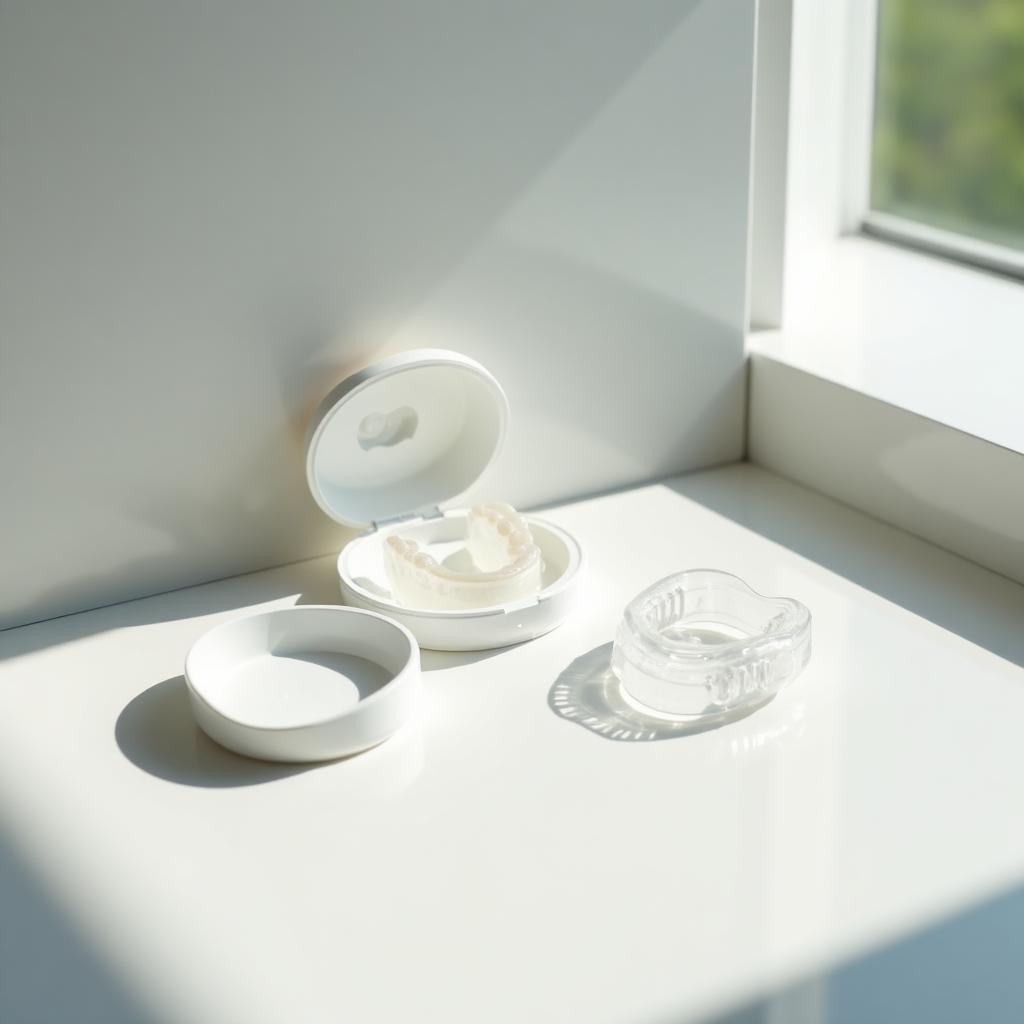
Shake the water off and let the retainer air dry before closing it in its case. A wet retainer sealed in a closed case is the number one cause of that musty retainer smell: trapped moisture is exactly what bacteria and mould need to grow.
How to Deep Clean a Retainer (Once a Week)
Daily brushing keeps the surfaces clean, but a weekly deep clean removes the buildup a toothbrush can't reach, particularly inside the tooth impressions where plaque and calcium collect. Pick one of these three methods:
Retainer cleaning tablets
Dissolve a retainer-specific cleaning tablet in cool or lukewarm water and soak for the time on the packet (usually 15 to 20 minutes). These are effervescent cleaners designed for clear dental plastics. Avoid denture tablets as a routine choice, as some contain bleaching agents that discolour retainer plastic over time.
Ultrasonic cleaner
An ultrasonic cleaner uses high-frequency vibrations in water to shake debris and bacteria out of the grooves a brush can't reach, with no chemicals at all. A few minutes per session, a few times a week, keeps clear retainers noticeably clearer. It's the lowest-effort deep clean and also works on aligners, mouthguards and jewellery.
White vinegar soak
Mix equal parts white vinegar and cool water and soak the retainer for 15 to 20 minutes, then brush gently and rinse well. The mild acid dissolves the calcium deposits behind white buildup. It's the cheapest method, though the smell means most people prefer tablets or an ultrasonic cleaner for regular use.
From our shop
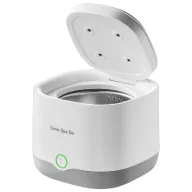
Cordless Ultrasonic Retainer Cleaner
If you'd rather skip soaking times and chemicals, our cordless ultrasonic cleaner deep cleans a retainer in five minutes with just water. USB-C rechargeable, with UVC sterilisation, and it also works on aligners and mouthguards.
Shop the ultrasonic cleanerWhat Not to Use on a Clear Retainer
Most retainers that need replacing early weren't lost or broken, they were damaged by the wrong cleaning products. Clear retainers are thin thermoformed plastic, and these common products damage them permanently:
✓ Safe to use
- • Cool or lukewarm water
- • Soft toothbrush + mild unscented washing-up liquid
- • Retainer cleaning tablets
- • Ultrasonic cleaner (water only)
- • 50:50 white vinegar and water soak
✗ Never use
- • Hot or boiling water (warps the plastic instantly)
- • Toothpaste (abrasive, scratches and clouds the plastic)
- • Bleach or household cleaners (damage plastic, toxic residue)
- • Alcohol-based or coloured mouthwash (dries out and tints plastic)
- • Dishwasher (heat warps it beyond repair)
Warped retainer?
A warped retainer cannot be reshaped at home and should not be worn: it no longer applies the even, passive pressure that holds your teeth in place. If yours has warped, order a replacement retainer promptly, as teeth can begin shifting within weeks without one.
How to Remove White Buildup from a Retainer
The chalky white layer that builds up on retainers is calcium deposit (tartar), the same mineral buildup that forms limescale in kettles. It comes from your saliva and won't brush off once it has hardened. The fix is a mild acid soak: mix equal parts white vinegar and cool water, soak the retainer for 15 to 20 minutes, then brush gently with a soft toothbrush and rinse thoroughly. For stubborn buildup, repeat the soak or run the retainer through an ultrasonic cleaner afterwards to shake loosened deposits out of the crevices.
If the retainer still looks cloudy after descaling, the cloudiness is likely permanent: either deep staining or thousands of micro-scratches in the plastic itself. At that point cleaning won't restore it, and it's worth replacing, as a heavily scratched surface also holds onto bacteria.
Why Does My Retainer Smell (and How Do I Stop It)?
A smelly retainer is caused by bacterial buildup, the same anaerobic bacteria responsible for bad breath. They collect in the plaque film on the retainer's surface and multiply fastest in warm, damp, sealed environments, which is why a wet retainer closed straight into its case smells worse within days.
The fix is the routine above: brush the retainer daily (not just rinse it), deep clean it weekly, and always let it dry fully before it goes in the case. Clean the case itself weekly too with warm soapy water, as a dirty case re-contaminates a clean retainer. If a retainer still smells after a proper deep clean, the bacteria have colonised scratches in the plastic and it's time for a replacement.
Retainer Cleaning FAQs
How often should you clean a retainer?
Rinse your retainer with cool water every time you take it out, and brush it gently with a soft toothbrush and mild soap once a day. On top of the daily routine, deep clean it once a week using retainer cleaning tablets, an ultrasonic cleaner, or a white vinegar soak. Consistency matters more than intensity: a daily 60-second habit prevents the buildup that requires aggressive cleaning later.
Can I clean my retainer with toothpaste?
No. Toothpaste is abrasive and leaves micro-scratches in clear plastic retainers. The scratches make the retainer look cloudy and give bacteria more places to grow, so the retainer ends up dirtier and smellier over time. Use a drop of mild, unscented washing-up liquid on a soft toothbrush instead.
Can I use denture tablets to clean my retainer?
Occasionally, yes, but retainer-specific cleaning tablets are the safer routine choice. Some denture tablets contain persulphate bleaching agents that can discolour or weaken clear retainer plastic with regular use. Follow the soak time on the packet and never soak in hot water.
Can I soak my retainer in mouthwash?
No. Most mouthwashes contain alcohol and colourants. Alcohol dries out and weakens clear retainer plastic, and coloured mouthwash can permanently tint it. A quick rinse in diluted alcohol-free mouthwash will not ruin a retainer, but it is not a substitute for proper cleaning.
When should I replace my retainer instead of cleaning it?
Replace your retainer if it stays cloudy or smelly after deep cleaning, has visible cracks or rough worn patches, or no longer fits snugly. A permanently discoloured or damaged retainer harbours bacteria that cleaning cannot fully remove, and a poor fit means it is no longer holding your teeth in position. Our guide on whether retainers can move teeth back explains what happens if you leave a gap between retainers.
Retainer past saving? Order a replacement online from £89
Custom clear retainers made in our UK dental lab. No dentist visit needed. Free shipping. 60-day fit guarantee.
Order Clear Retainers